Kazakhstan’s main research funding programs include General Grant Funding for individual research projects selected through national competitions. The “Zhas Galym” (Young Scientists) program supports early-career researchers with dedicated grants. Program-Targeted Funding (PTF) finances large strategic research programs aligned with national priorities.
Overview: Main Research funding programs in Kazakhstan
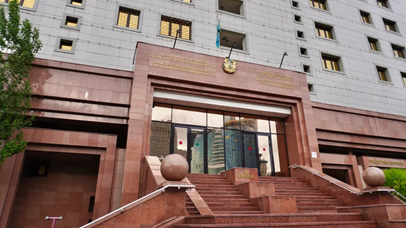
1. Zhas Galym Program
The funding program of the Ministry of Higher Education and Science of the Republic of Kazakhstan (MHES) supports young scientists up to 40 years of age. The program is intended to make a significant contribution to promoting innovation in the context of sustainable development.
Financing: Funding is provided from 20 to 100 million tenge for a project of up to 3 years.
Priority areas:
- ecology and climate change
- rational use of water resources
- digitalization and automation
- renewable energy
- agricultural technologies and food security
- biotechnologies and public health
More detail information https://www.ncste.kz
2.General Grant Competition
The program is funded by the MHES. It supports three-year research projects for universities and research institutes. Project approval is based on a competitive selection process. Both basic and applied research are supported.
Financing:
– Small projects: 15-25 million tenge per year;
– Medium-sized projects: up to 50 million tenge per year;
– Large projects: up to 150 million tenge per year (especially in priority areas).
Priority areas:
– energy and resource conservation;
– ecology and water resources management;
– IT and artificial intelligence;
– mechanical engineering and new generation materials;
– agriculture, food security;
– humanities and social sciences for sustainable development
More detail informationhttps://www.ncste.kz
3.Program-Targeted Funding (MHES and other Ministries)
They are focused on the application-oriented research. These long-term government programs aim at addressing major strategic national objectives. The topics are defined by the state, not by the researcher. Funding is provided not to an individual scientist but to a research team or an organization to implement a government program.
Financing:
The amount of funding is up to 300 million tenge for a consortium (university + branch research institutes and multi-year durations (3–5 years). Funding is provided to application-oriented projects related to government priorities.
Priority areas:
– efficient irrigation and water conservation;
– drought and flood management;
– digitalization of agriculture;
– restoration of pastures and soils;
– increasing the yield and sustainability of agricultural systems.
More detail information https://www.ncste.kz
Submission of applications:
Applications can be submitted via the national portal of scientific grants — https://is.ncste.kz.
Submission requires an electronic digital signature (EDS) and registration of the organization.