Tajikistan develops its science sector in accordance with the National Development Strategy until 2030 (NDS-2030), where science, technology, and innovation are considered key drivers of economic modernization and social development. NDS-2030: https://web.ttu.tj
The country’s science policy is based on the Law on Scientific Activity and State Policy on Science and Technology, which defines the legal framework for research, scientific institutions, human capital development, innovation support, and intellectual property protection. Law on Scientific Activity: https://bwcimplementation.org
Tajikistan has identified priority research areas for 2021–2025, including mathematics and natural sciences, biological, chemical, nuclear, and environmental safety, nanotechnology and new materials, mechanical engineering, as well as digital technologies such as IT, modeling, artificial intelligence, robotics, and unmanned systems.
Priority areas 2021–2025: https://amit.tj/ru
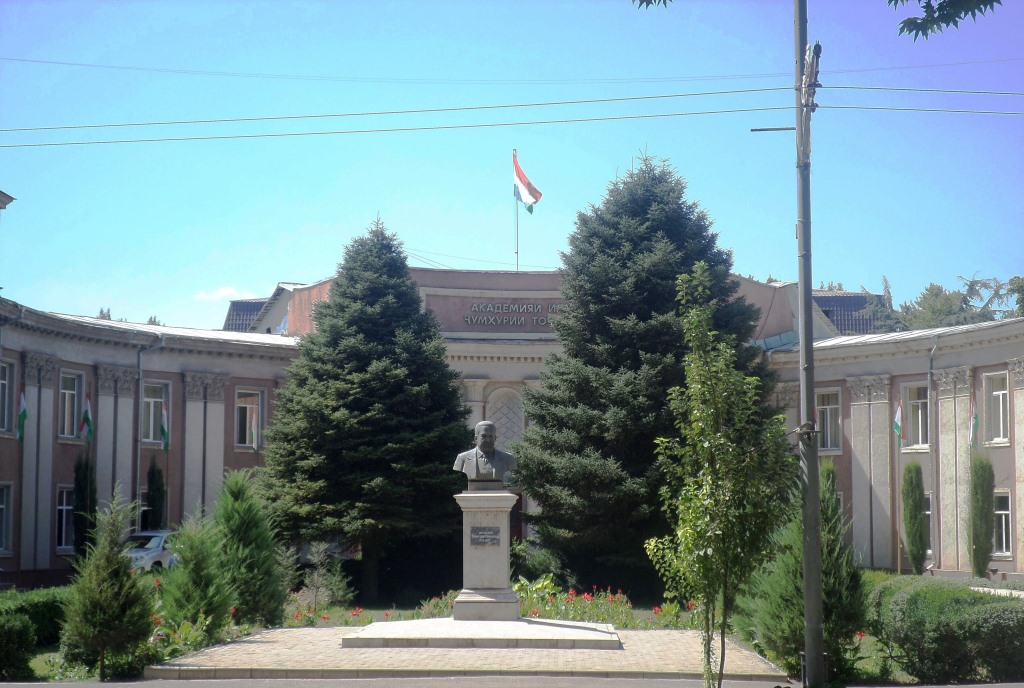
The National Academy of Sciences of Tajikistan plays a central role, supported by the Agency for Innovation and Digital Technologies under the President, which coordinates the country’s innovation and digital transformation agenda.
The strategy focuses on modernizing scientific infrastructure, strengthening cooperation between universities, research institutions, and industry, increasing commercialization of scientific results, and creating a more supportive innovation ecosystem. At the same time, Tajikistan faces challenges such as limited funding, a weak innovation environment, and insufficient integration of science and production. Strengthening the science and innovation system is considered essential for the country’s sustainable development.
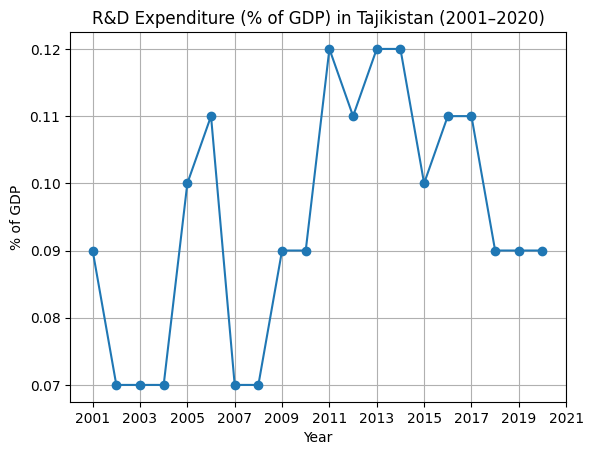
Research and development expenditure, percent of GDP
In 2020, Tajikistan’s spending on R&D (research and development) amounted to 0.09% of GDP.In 2019, it was also 0.09% of GDP.R&D expenditure (as a percentage of GDP) has been declining for three consecutive years.Since monitoring began in 2001, this indicator has increased by a factor of 1.00.The highest level of R&D expenditure in Tajikistan was recorded in 2011 at 0.12% of GDP(figure 1 )https://statbase.ru
Forms of financing:
-Science and Technology Fund (STF)
MongoliaThe national funding agency that provides competitive grants for research, innovation projects, scientific infrastructure, and young scientist programs across Mongolia.https://stf.gov.mn
-Ministry of Education and Science of Mongolia (MOE)
The central government body responsible for national policy in education, higher education, research, innovation, and human capital development. It oversees universities, research programs, and science funding.
https://www.meds.gov.mn
-Mongolian Academy of Sciences (MAS)
The highest scientific institution in Mongolia, coordinating fundamental and applied research through its network of research institutes in natural sciences, engineering, and social sciences. https://mas.ac.mn
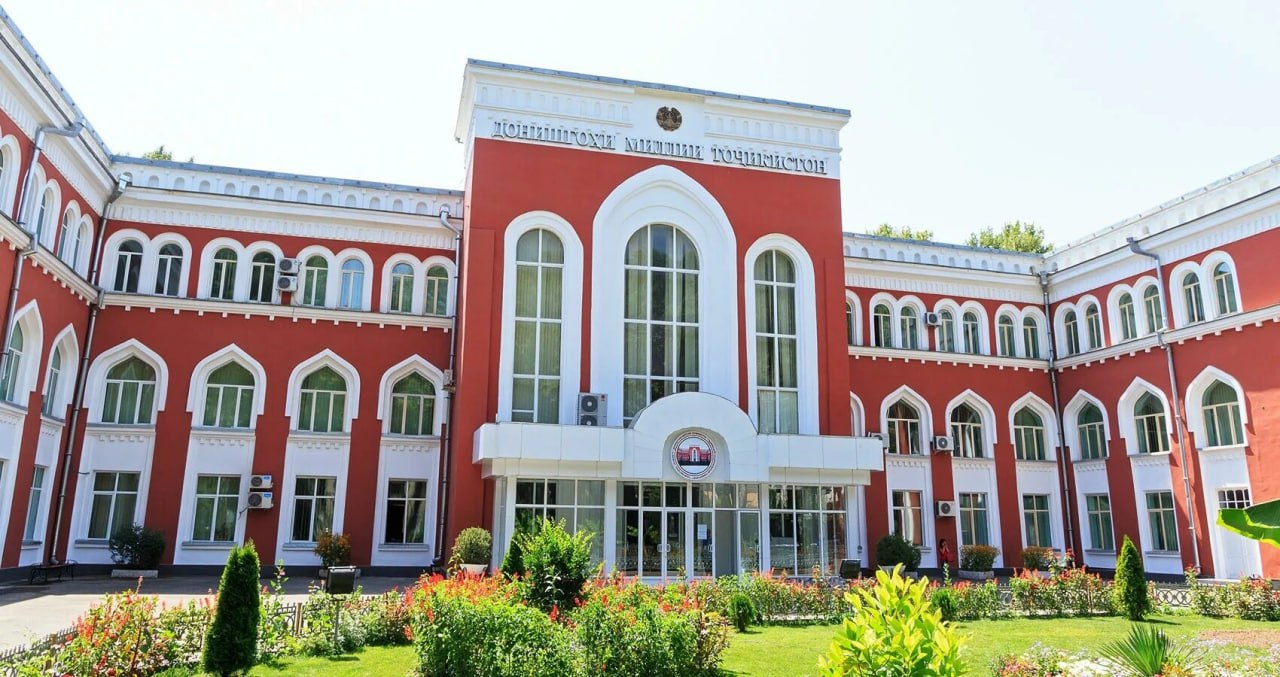
There are about 27 accredited universities in the country, most of which are state — owned. Among them: Tajik National University, Avicenna Tajik State Medical University, Tajik Technical University, Khujand State University, Tajik Agrarian University, Russian-Tajik Slavonic University and others https://www.unirank.org/tj
The education system is centralized and managed by the Ministry of Education and Science of the Republic of Tatarstan. Although Tajikistan is not officially part of the Bologna Zone, educational standards are being reformed in accordance with the Bologna process: three levels of education and an ECTS-like credit system have been introduced, and the medium-term development strategy until 2030 is aimed at integration into the European educational space https://www.researchgate.net
The World Bank implemented the Higher Education Project (HEP) aimed at improving the quality of education and labor market compliance: it covered more than 77% of higher education institutions, implemented grant programs, updated standards and strengthened the quality control system for traininghttps://www.worldbank.org/en
Leading universities in Tajikistan